
How to Choose a Safe and Fair Bitcoin Casino in Canada: A 2026 Player's Guide to Licensing, Payouts, and Responsible Gambling
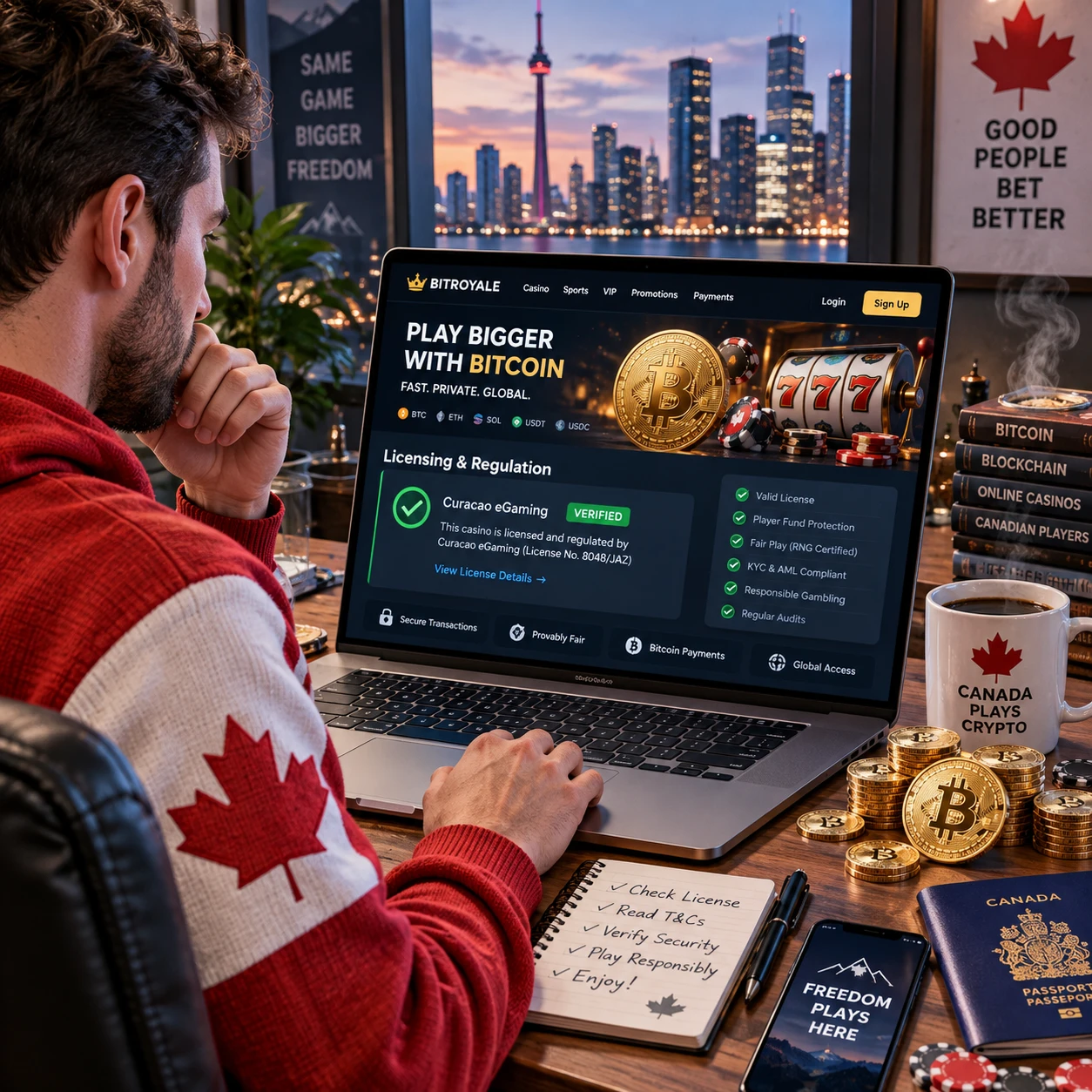
Crypto gambling snuck up on Canadian players this year — quietly, but it happened fast. I watched the shift play out in real time. Friends who used to complain about slow bank transfers and currency conversion fees are now cashing out winnings in minutes, all through Bitcoin. Makes sense, honestly: near-instant withdrawals, barely-there fees, and a layer of privacy traditional online casinos just can't touch. But here's what nobody mentions enough — the same features that make crypto gambling attractive also turn it into a magnet for shady operators. No central bank backing the transaction. No credit card company to call for a dispute. You're on your own if things go sideways. So I put together this guide: licensing checks, payout verification, and the responsible gambling habits that actually separate a legit platform from a liability.
What Makes a Bitcoin Casino 'Safe' in 2026?
Safety in this space comes down to a handful of non-negotiables. First, valid licensing from a recognized regulator — and I mean an actual, verifiable registration, not just a logo someone slapped in the footer. Second, provably fair gaming technology, which lets you mathematically check that game outcomes weren't tampered with. Third, SSL encryption protecting your wallet connections and personal data. Fourth — and this one gets overlooked — terms and conditions that are actually readable, not buried under legal jargon built to confuse you.
What makes Bitcoin casinos trickier than fiat ones? The pseudonymous nature of blockchain transactions. Deposit through a credit card and there's a paper trail, often a chargeback option too. Send Bitcoin, though, and it's gone. No bank to call if the platform vanishes overnight. That shifts the due diligence burden almost entirely onto you, the player. I tell people this a lot: treat every unfamiliar crypto casino like a stranger asking to borrow money. Verify first. Trust later.
Licensing Bodies to Recognize
Not all licenses carry equal weight — not even close. Here are the jurisdictions I treat as reliable benchmarks for Canadian players:
- Malta Gaming Authority (MGA) – known for strict compliance standards and regular audits.
- Curacao eGaming – widely used, though quality varies between sub-license holders, so always check the specific license number.
- Kahnawake Gaming Commission – a Canadian-based regulator operating out of the Mohawk Territory of Kahnawake, popular with crypto-friendly platforms.
Verification's simple, but people skip it anyway: copy the license number listed on the casino's site, cross-check it directly on the regulator's official registry. Doesn't match? Regulator has zero record of it? That's your answer, right there.
Evaluating Fair Play and Payout Reliability
'Provably fair' isn't just a marketing phrase tossed around to sound trustworthy — it's a cryptographic system that lets players verify, after the fact, that a game's outcome wasn't manipulated. Each bet generates a hash you can check against the server seed once it's revealed. If a casino skips this verification tool for its crypto games, I take that as a yellow flag. Not a dealbreaker necessarily, but close.
RTP (Return to Player) percentages matter too. A slot advertising 96% RTP should actually deliver results consistent with that over time, and independent auditors like eCOGRA or iTech Labs exist specifically to confirm this. Look for their certification badges, then click through and confirm they're genuine — not just decorative images someone pasted in to look official.
On the payout side, Bitcoin withdrawals should typically process within a few hours to 24 hours once KYC is cleared. Anything stretching into multiple days without explanation? Red flag. Platforms that suddenly impose withdrawal caps you weren't told about at deposit time? Also a red flag — one I learned to spot the hard way.
Reading the Fine Print on Bonuses
Crypto casinos love flashy bonus numbers — 200%, 300%, sometimes higher. But the wagering requirements buried in the terms often mean betting 40x or 50x the bonus amount before you can withdraw a cent. Bonus abuse clauses can void your winnings entirely too, if you deposit from multiple wallets or run a VPN. My rule of thumb: if a bonus sounds too generous to be sustainable, the platform's probably recouping that cost somewhere else. Usually through unfair wagering terms. Or slow payouts. Sometimes both.
Comparing Bitcoin Casinos to Traditional Online Casinos
For Canadian players weighing options, it comes down to speed, privacy, fees, and support. Bitcoin transactions settle in minutes, not the days typical of bank transfers. Anonymity runs higher too — you're not handing over full banking details, though reputable platforms still require KYC for compliance, no way around that. Fee structures favor crypto as well; network fees are usually a fraction of what traditional payment processors charge.
Where fiat casinos sometimes edge ahead is customer support responsiveness, since established operators often have more mature support infrastructure built up over years. That said, plenty of crypto-first platforms have closed that gap in 2026, offering live chat and dedicated crypto support teams around the clock.
How to Research and Shortlist a Trustworthy Platform
Before depositing a single satoshi, I run through a short checklist — nothing fancy, just habit at this point. Start with third-party review aggregators compiling player complaints and payout histories. Check community forums, Reddit threads, Trustpilot reviews — patterns of unresolved complaints tell you more than any marketing page ever will. Confirm customer support actually answers when you need it; send a test message before you even register.
Then test the platform with a small deposit and withdrawal before committing larger sums. This one step catches more problems than any amount of reading reviews ever could. When researching how a legitimate bitcoin casino handles licensing disclosures and player protections, I often point newer players toward resources like tourgaliano.ca as a model of what transparent, well-documented platform review actually looks like — showing exactly the kind of information a trustworthy operator should make easy to find.
Responsible Gambling Tools Every Canadian Player Should Use
Even the safest, best-licensed Bitcoin casino won't protect you from yourself if you don't set boundaries ahead of time. Self-exclusion programs, deposit limits, reality check pop-ups — they exist for a reason, so use them before you think you need them. Canadian players also have access to dedicated support resources like ConnexOntario and the Responsible Gambling Council, both offering confidential guidance.
Crypto's speed cuts both ways here. The same instant transactions that make withdrawals convenient also make impulsive re-deposits dangerously easy. Setting hard limits isn't weakness — it's smart planning, plain and simple, given how fast crypto moves compared to the traditional banking friction that naturally slows people down.
Spotting Problem Gambling Patterns Early
Warning signs worth taking seriously:
- Chasing losses by increasing bet sizes to 'win it back'
- Hiding wallet transactions or crypto balances from family
- Borrowing crypto or taking out loans specifically to keep gambling
If any of this sounds familiar, Canadian players can reach out to the Responsible Gambling Council or provincial helplines for confidential support — no judgment, just help.
Common Mistakes Canadian Players Make with Crypto Casinos
I've seen the same mistakes repeat often enough to just list them plainly. Skipping license verification because the site looks polished — looks mean nothing. Ignoring currency conversion fees when moving between Bitcoin and in-game credits. Delaying KYC submission until withdrawal time, which almost always causes frustrating delays (and it's always avoidable). And maybe the riskiest of all: choosing unregulated 'no-KYC' platforms purely for anonymity, without realizing that skipping verification also means skipping any dispute resolution if the platform just refuses to pay out.
Conclusion
Choosing a safe Bitcoin casino in Canada in 2026 really comes down to a repeatable checklist: verify the license directly with the regulator, confirm fair play certification through independent auditors, review actual payout history rather than marketing promises, and keep responsible gambling tools active from day one. None of this is a one-time task — crypto gambling platforms evolve fast, licenses get revoked, ownership changes hands more often than players realize. Treat due diligence as an ongoing habit, not a box you check once. Do that, and you'll be in a far better position to enjoy the speed and convenience of Bitcoin gambling without the risks that come from cutting corners.